If You Want Better Policy, Start With Youth Voice.
December 15, 2025
Last week, I traveled to Washington, D.C. to speak at Afterschool Alliance’s 2025 Youth Development Policy Table, and the experience hit me in a way I didn’t fully expect. Being able to talk about the issues I’ve lived, studied, and advocated for made everything feel heavier. Change has always been part of this country’s story, and in that moment, we were carrying that momentum forward.
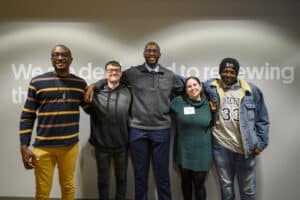
Representatives of the Forum for Youth Investment, pictured from left to right: Gerod Blue, Director of Federal Policy & Advocacy; Russell Lang; Arlo Andre Allotey, Policy Consultant; Meredith Hills, Policy Consultant; Issa Ouarid.
The purpose of the convening was straightforward: advocate for stronger, more intentional youth development policies. I was there representing the Forum for Youth Investment, pushing national leaders to think about how to better connect with young people, how to bring youth into policy conversations early, and why people directly affected by policies need to be involved from the very beginning. I came into the room carrying both my lived experience and the academic grounding to put that experience into numbers. I didn’t just want to share what I went through; I wanted people to understand that there’s data behind those stories, and that the patterns are bigger than any one person.
The panel itself focused on how the federal landscape around youth programs is shifting — funding, workforce expectations, education policy, all of it. I spoke alongside fellow Opportunity Youth Congressional Liaison (OYCL) alum and Afterschool Ambassador Issa Ouarid, with moderator Gerod Blue, Director of Federal Policy and Advocacy at the Forum. At one point, Issa shared a story about how bad lunches were at his school and how kids skipped meals to avoid them. When he and his mother pushed the school for change, the turning point wasn’t just the advocacy — it was the school being honest about its limitations. That transparency allowed parents to step in and help. This story stuck with me because it showed why transparency matters… Systems can’t improve if they hide their weaknesses.
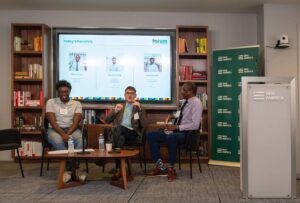
Pictured from left to right: Issa Ouarid, Russell Lang, and Gerod Blue, Director of Federal Policy & Advocacy
When it was my turn, I talked about the fourteen years I spent in the child welfare system and how often that system protected agencies and foster parents instead of the youth it was supposed to serve. I shared insights into why programs should be designed with youth, not just for youth, and how giving young people real involvement from the start changes everything. I also spoke about what helps me stay committed to advocacy: fair compensation, real opportunities to build skills, and the flexibility to show up in ways that align with my strengths. I talked about the Sullivan Deckard Scholarship Opportunity Program at Cleveland State as proof that when programs invest intentionally in youth, trust grows, transparency grows, and long-term engagement naturally follows.
Throughout the convening, a theme stood out to me: even when the federal administration isn’t prioritizing youth-centered issues, people are still stepping up. Youth workers, organizations, local leaders, advocates… they’re bridging the gaps that policy leaves behind. We also had a conversation about language that really shifted my thinking. The labels and lingo we use can completely change how people perceive or experience a program. The wrong language pushes people away before they even walk in the door. It reminded me to be intentional with how I communicate this work.
But honestly? The human moments are what stuck with me the most. I walked into a room where I felt accepted without needing to explain my trauma to be validated. That alone meant so much to me. I also got to meet Merita Irby, one of the founders of the Forum for Youth Investment, and the conversation was genuinely transformative. She was open, personal, and honest in a way that caught me off guard — in a good way. I’ve been struggling with validation and how I fit into the youth development space, and she took the time to talk through how she navigated it and what helped her push forward. That conversation shifted something in me. It made me believe that I belong in these spaces not because of my experiences, but also because of the work I’m committed to doing.
Being in D.C. amplified everything. There’s a unique energy being in the capital of the United States — a weight you can just feel in the air. The decisions made there affect millions of people. Speaking about youth issues in a place with that kind of history made everything feel more urgent and more real. It reminded me that advocacy at the national level isn’t abstract. It’s necessary for change.
After the panel, I got messages from people who said the discussion changed the way they think about their work. That meant a lot because it showed why youth voice can’t be optional. Youth and families see things from angles that data alone can’t capture. When their insight shapes programs from the beginning, the work becomes more effective, more trusted, and more aligned with what people actually need.
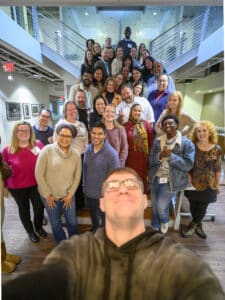
Pictured: Russell Lang with attendees of the Afterschool Alliance’s 2025 Youth Development Policy Table
If there’s one thing I hope people walk away with, it’s this: the people most affected by a system should be helping shape it. Start designing programs with youth, not just for youth. It’s simple really, but if more leaders embraced that, we’d see real and lasting change.
This trip reinforced that I’m on the right path. I’m learning, growing, and committed to fighting for the millions of youth who will come after me.
Russell Lang works as a published photographer recognized for his striking cityscape work across Cleveland, Ohio. As a graduate of the Opportunity Youth Congressional Liaison Program, he advocates for strengthening the child welfare system, expanding access to higher education for emancipated foster youth, and raising awareness about what growing up in foster care looks like. Check out more of his work on Instagram @russ_lang_photography or by visiting his website at russlangphotography.com.